

Consumer Research & Strategy for Veo
Focus:
Behavioral Research, Strategic Recommendation
Role:
Research & Strategy Lead (Group Project)
Timeline:
Fall 2025
Context
Veo is an app-based micromobility company operating on college campus across the United States. While Veo provides a convenient alternative to walking or driving, they struggle with long-term loyalty and how riders perceive Veo when they choose to use it. The goal was to move beyond assumptions and use behavioral insight to inform strategic recommendations around brand positioning, product features, and user experience.

My Role
Within our team of four, I led the research design and strategic framing of the project.
-
Designed and wrote the primary consumer survey
-
Analyzed behavioral patterns and decision drivers
-
Developing two of the three consumer segments
-
Created the Mobility Perception Map to visualize tradeoffs between speed and cost
-
Translated research into recommendations
Research Approach
Our research combined quantitative and qualitative methods to understand how Veo fits into everyday transportation decisions.
-
Primary research survey (n = 52)
-
Behavioral and perception-based interviews
-
Analysis of usage timing, motivation, and brand associations
-
Competitive context review
Together, these methods clarified when, why, and under what conditions riders choose Veo over alternatives.
Key Insights
Several patterns emerged across responses, revealing a gap between Veo's functional value and its perceived role in students' lives.
-
Speed and convenience are the primary usage drivers
-
Veo is seen as practical, but loyalty is low, and most riders use it situationally rather than habitually
-
Safety matters to riders, especially at night, but it is not strongly associated with the brand

Mapping transportation options revealed Veo's position as faster than walking and biking, cheaper than driving, and primarily valued for convenience.

While convenience is strongly associated with Veo, safety (despite being important to riders) is not a defining brand attribute.
Behavioral Segmentation
Instead of segmenting only by ride frequency, we built profiles around motivation and mindset.
Situational Speed Seeker (developed by me)
-
Uses Veo only when necessary
-
Motivated by urgency
-
Views Veo as a faster alternative to walking
-
Low brand loyalty
Night-Safety Rider
(developed by me)
-
Rides primarily between 6pm and 6am
-
Motivated by safety
-
Uses Veo to avoid long walks at night
Everyday User
-
Uses Veo as primary transportation
-
Most profitable but smallest segment
-
Price-sensitive

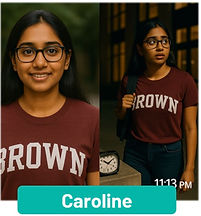

These segments clarified Veo serves multiple use cases, each with distinct needs and opportunities.
Key Problems Identified
-
Low loyalty — most riders use Veo infrequently and without attachment.
-
Safety perception gap — safety matters to users but is weakly associated with the brand.
-
Vehicle reliability concerns — inconsistent experiences negatively impact trust and repeat use.
Strategic Recommendations

BetterRide Loyalty Program
An interactive, point-based loyalty program designed to increase engagement and repeat use.
-
Rewards frequent riders with incentives
-
Uses geo-fenced push notifications to prompt timely usage
-
Reinforces Veo as an "in-the-moment" alternative to walking or transit
Geo-fenced mockups of push notifications to the right.


Slow Zone Expansion
An expansion of speed-limited zones during risky locations and times.
-
Targets high traffic and impaired riding windows
-
Reinforces safety without restricting everyday use
-
Aligns product offering with night rider behavior patterns
Slow Speed Zone mockup to the left.
Veo Trike Implementation
A three-wheeled vehicle concept designed to expand accessibility and reduce rider risk.
-
Increases stability and safety
-
Supports riders new to micromobility
-
Expands Veo into new demographic segments (youth and older adults)
Veo Trike mockup shown to the right.

Reflection
This project reinforced that effective problem-solving starts with understanding the audience. Developing consumer segments, mapping perceptions, and analyzing decision-making patterns showed me how behavioral research translates directly into strategic recommendations, from new product concepts to promotional approaches.